
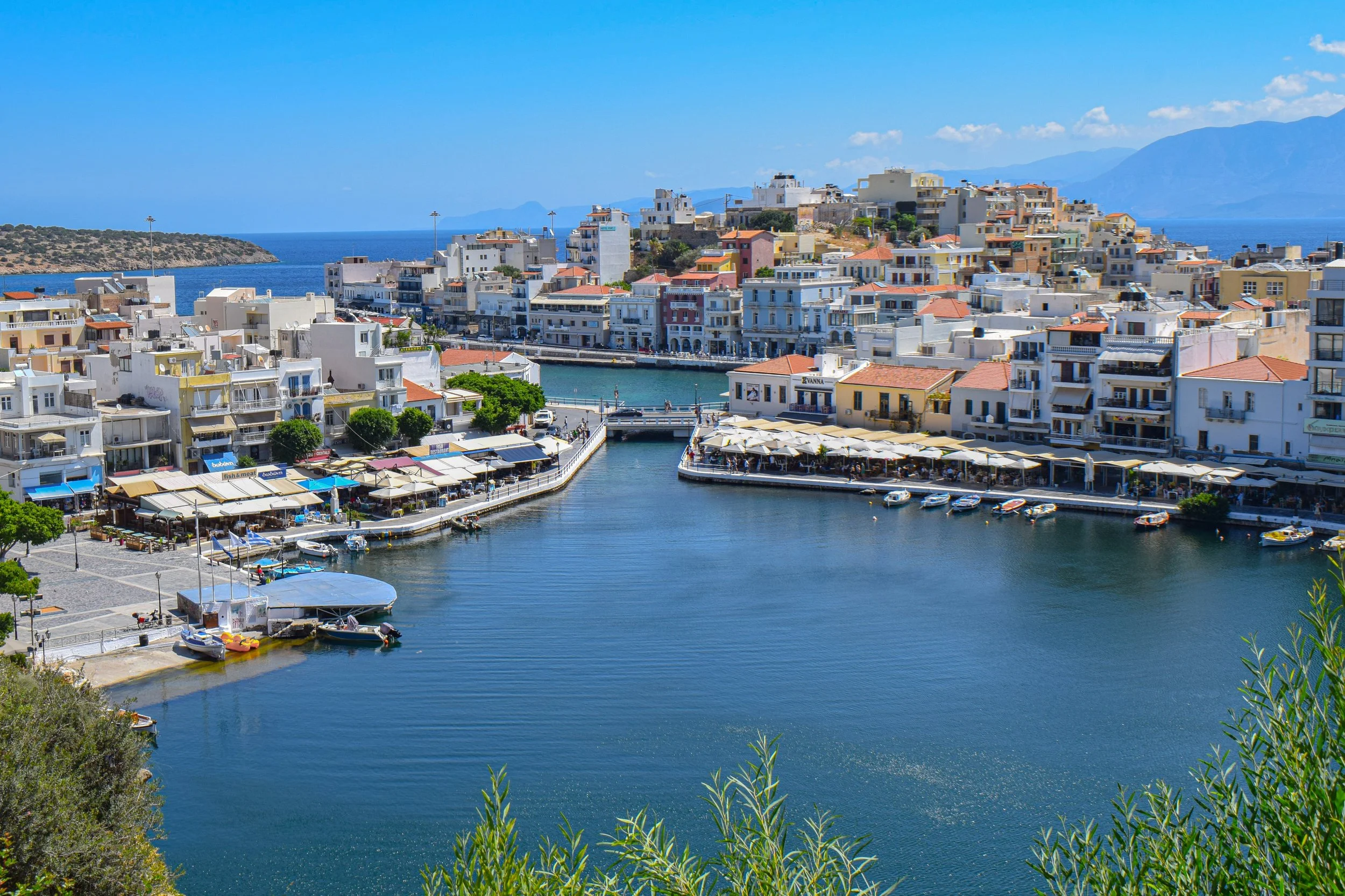
Titus: A Blueprint for the Church in Crete
The book of Titus is so exciting. If you are a church planter, or want to become one, you should do a good study of the book of Titus. Don’t skip the context of the book or all the little details about Crete and the Cretans. It becomes super exciting.
What makes the book even more exciting is its geographical location.
Crete was strategically positioned as a major merchant trade island, connecting four major regions: AFRICA, ASIA MINOR MIDDLE EAST & EUROPE.
That one detail changes how you read the entire letter.
The church in Crete was likely planted by Paul. Afterwards, Paul saw the need to do some diligence regarding the spiritual climate of the Christians, which was a little messed up. Crete wasn’t a bad place to plant a church. In many ways, it was actually a great place.
Crete must have been a very happening place. It was a place of opportunity, making wealth, getting rich, building networks, enjoying good food and wine, and meeting people from all over the world. Different cultures, languages, opinions, trends, conversations, an entrepreneurial spirit, and wealthy traders, all of these were major elements in the context of Crete. With all of that came influence. Certainly not all of it was healthy.
Paul’s main concern was biblical faithfulness in a church surrounded by all these influences. The question wasn’t whether Crete was successful; it was whether the church would remain faithful to Christ. Paul wanted the church to be shaped by the gospel, not by the culture around it.
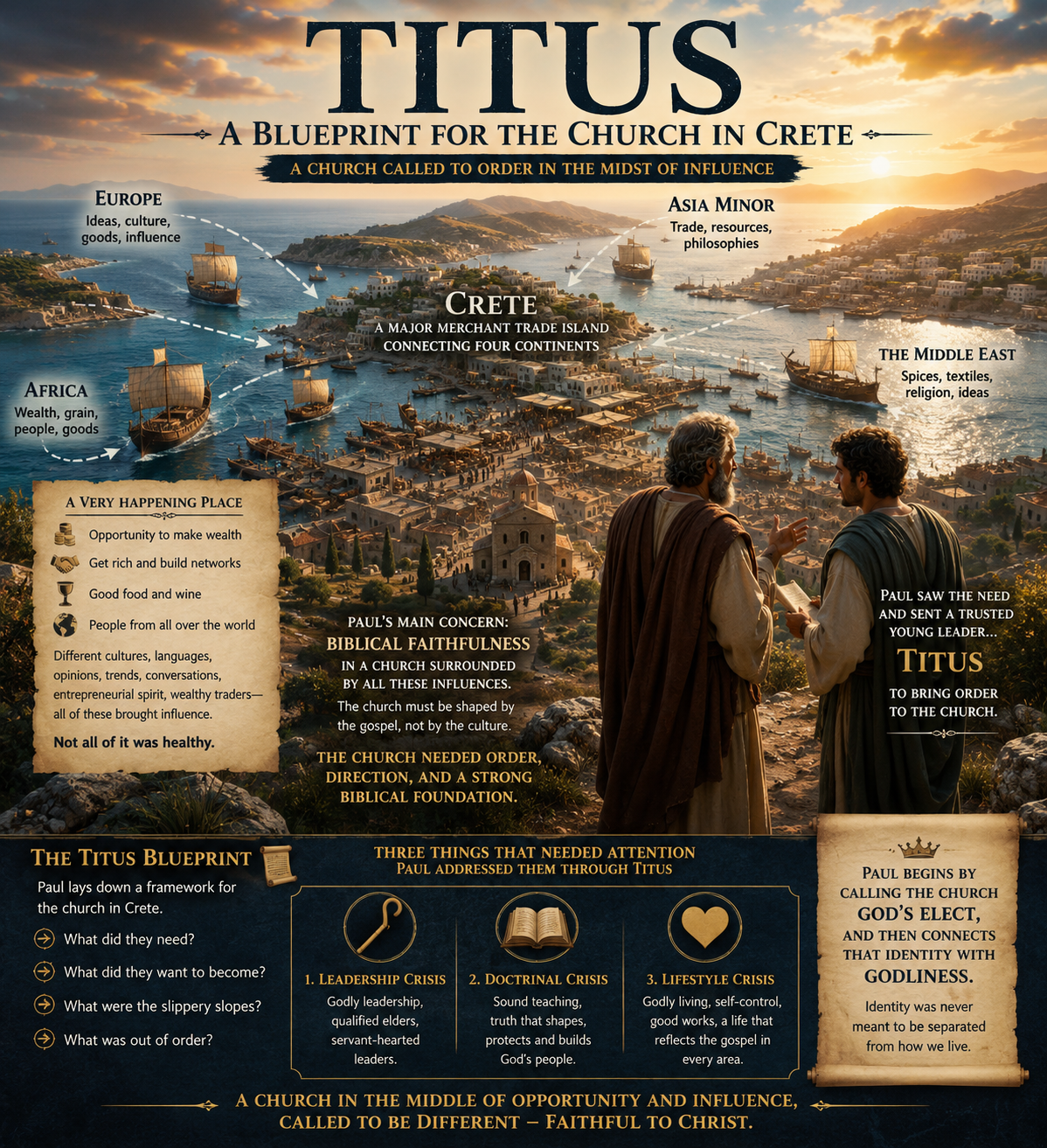
In the middle of all the opportunities and influences, Paul wanted the church to have order, direction, and a strong biblical foundation.
This is why the church in Crete needed a blueprint.
Paul lays down a framework for the church.
What did they need?
What did they want to become?
What were the slippery slopes?
What was out of order?
Paul left Titus, a trusted young leader and faithful coworker, in Crete to bring order to the churches .
Three things needed the church’s immediate attention, and Paul addressed them through Titus:
Leadership Crisis
Doctrinal Crisis
Lifestyle Crisis
These three issues are not unique to Crete. They are still the three battles every healthy church must pay attention to today.
One of my favorite observations is how Paul begins the letter. He first reminds the believers that they are God’s elect, and then immediately connects that identity with godliness. Titus 1:1-4 ESV
Identity was never meant to be separated from how we live.
A church planted in one of the busiest, most influential trade centers of the ancient world was called to be different, not isolated from its culture, but faithful within it.